
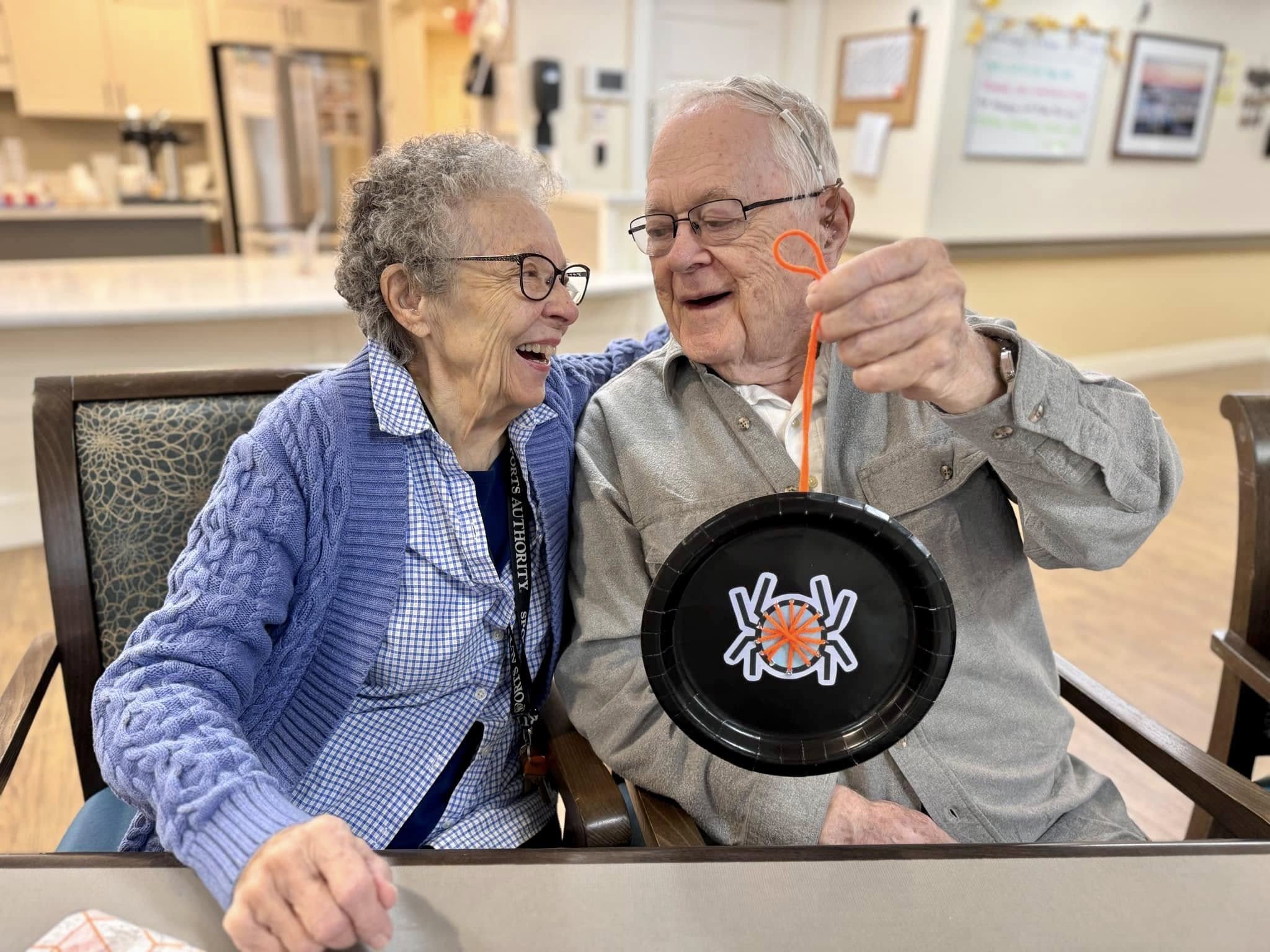
One of the biggest questions families have is simple: What will my loved one’s day actually look like?
There’s often a fear that moving into memory care means losing independence or structure. In reality, many residents experience the opposite. A well-designed memory care community provides consistency, engagement, and support that can be difficult to maintain at home.
Days are built with intention, but they don’t feel rigid. There’s a natural flow, meals, activities, quiet time, all designed to feel familiar rather than forced. Some residents enjoy group programs like music or light exercise, while others prefer quieter, one-on-one engagement. Both are equally important.
Social connection is a big part of what makes community life meaningful. At home, isolation can slowly set in, especially as communication becomes more difficult. In a community setting, there are regular opportunities for interaction, whether it’s sitting together at a meal or simply being in a shared space with others.
Activities are also approached differently than many people expect. They aren’t about “filling time.” They’re designed to meet people where they are, whether that means stimulating conversation, encouraging movement, or simply creating a moment of calm and enjoyment.
Another thing families often notice is a shift in their loved one’s overall mood. When the environment is predictable and supportive, anxiety tends to decrease. Residents can relax into the day rather than feeling like they’re constantly trying to keep up.
For families, there’s also a sense of relief. Knowing that your loved one is safe, engaged, and supported allows you to step out of the role of full-time caregiver and return to being a spouse, child, or friend again.